- The Echelonn Newsletter
- Posts
- What it takes to get recommended by ChatGPT
What it takes to get recommended by ChatGPT
Why LLMs aren't recommending your brand (and how to fix it)

Jackson Blackledge
March 28, 2026 • Estimated Reading Time: 6 minutes

The other day, I was reviewing a client account’s performance when I found an interesting number:
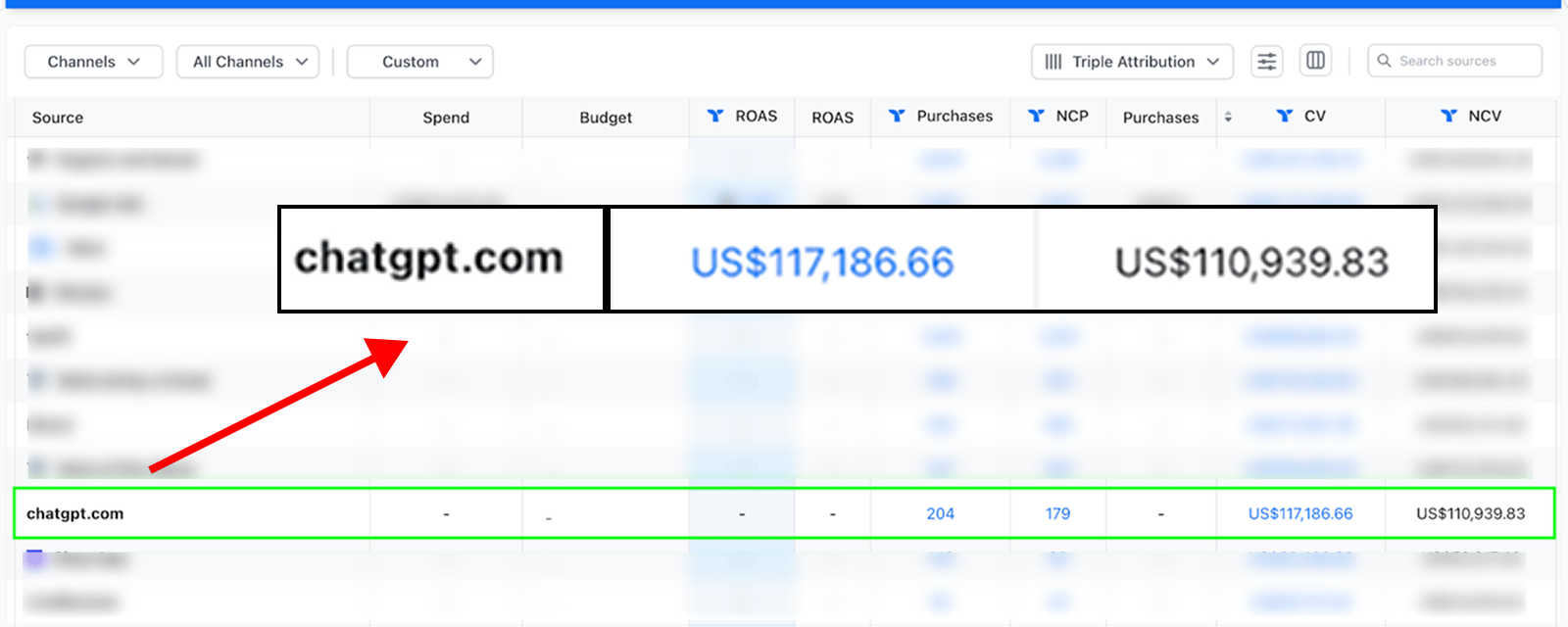
This brand generated $117K in revenue from ChatGPT in 90 days.
Over the past year, our SEO team has been running a bunch of tests on this, and it feels great to see such results.
Ranking inside these chatbots has been a hot topic for the past year.
But I think most brands are still underestimating how big this is going to be.
People are putting their thoughts into these models every single day.
Problems, frustrations, desires, plans. All in their own words.
The volume and depth of that data is going to be significantly bigger than what Meta ever had.
That should make their targeting way more precise.
And the level of personalization you can unlock is something current platforms simply can't match.
This is more relevant than ever since ads are rolling out on these platforms.
ChatGPT is exploring this. Google rolled out product recommendations in AI Mode a while back.
Now, the question is…
How do you get your products recommended by these chatbots?
After months of internal testing, what we've found is that…
The fundamentals of traditional SEO are still the backbone of how AI ranking systems work.
These tools pull from authoritative sources and surface brands with strong signals across the web.
They trust the same things Google trusts:
Quality content
Structured information
Credible mentions
Strong review profiles
With that understanding, we've figured out several reliable ways to influence ranking inside these systems.
These have helped client brands show up in AI responses and drive real traffic & sales from them.
Let’s start with the most impactful one.
One of the more effective methods is building structured landing pages designed for how LLMs pull and process information.
Now, this goes beyond optimizing your current pages for LLMs.
You can build new pages around the questions people are asking before they buy.
Take supplement brands as an example.
Trust and credibility are a big deal in that space, and FDA approval is something a lot of buyers look for.
However…
The FDA website typically groups products into broad categories alongside a bunch of other brands.
This makes it hard for an LLM to surface specific information about your items.
The solution is to build an "FDA Page" on your site.
Inside, you put in every relevant detail about how your product got approved, its classification, the certification number, etc
Now the LLM has a clean, authoritative source to reference instead of guessing.
The same idea applies to a “brand facts” or product FAQ page.
A lot of brands have inconsistent information across the web (outdated claims, old messaging, wrong positioning).
As a result, LLMs sometimes pick that up and surface the wrong data.
A brand facts page gives them a single source of truth to pull from and lowers the odds of this happening.
Now, there’s an important detail here…
What pages you build depends on your industry and what drives buying decisions for your customers.
The research part is what makes or breaks this.
You need to know what people are trying to figure out before they buy… then build pages that answer it.
Beyond that, there are a few other factors that affect how you rank on LLMs:
1. Stack your social proof. Reviews, testimonials, and third-party mentions are the signals LLMs use to decide whether your brand is worth recommending.
2. Get your products appearing in review sites, independent roundups, forums, and communities where AI systems go to validate brand reputation
3. Clean up your product feeds so AI can easily pull accurate, well-structured information into its outputs
4. Optimize product titles and descriptions for conversational queries, not just keywords
5. Test Campaign Types Eligible for AI Overview and AI Mode (PMax, Shopping, Search campaigns running AI Max)
I believe the brands that show up inside these chatbots are going to have a massive edge in the future.
The ecom landscape has always rewarded people who moved early on distribution shifts before they became the “standard playbook.”
It was Google Ads in the early 2000s. Facebook Ads in 2013. TikTok Shop in 2020.
Every time, the early movers captured disproportionate returns before it got crowded.
And the signals right now are pointing to LLM chatbots being that next shift.
So if you want to move early, start showing up in these placements and capturing sales from them…
We’ll show you how to get ahead and position your brand for this change before everyone else catches on.
Jackson
Founder and CEO of Echelonn.
How we can help:
Get a free Google ads audit: For brands spending more than $20k/mo. or making over 1 million annually, we’ll identify the key bottlenecks in your account, and turn it into a free 90-day scaling plan. Click here.
Tell me more about yourself: Answer this 20-second survey so I can personalize your experience and make these emails more useful to you. Click here.
How did you like this article?Choose below |
P.S. Got a friend interested in Google ads? Share the love and send them our way.
If you’re that awesome friend, you can subscribe here.